
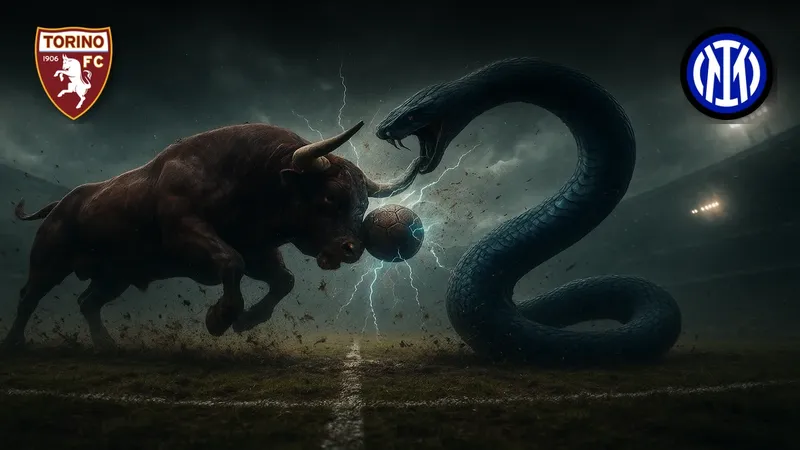
Inter arrive at the Stadio Olimpico Grande Torino on Sunday as the form team in this fixture, and Torino's home crowd will need to provide what the recent head-to-head record cannot: a reason for optimism. The Nerazzurri have won the only meeting between these sides in the available data, and Cristian Chivu's Inter carry a five-game unbeaten run into this encounter. For Leonardo Colucci's Torino, hosting a side of this calibre represents the clearest test yet of whether their recent resurgence is genuine or circumstantial.
The stakes are asymmetric. Inter need points to maintain pressure in the upper reaches of the table, where the gap between Champions League qualification and a place in the secondary European competitions can hinge on a single result in late April. Torino's ambitions are more defensive in nature: consolidate mid-table respectability and avoid the kind of defeat that reopens questions about their season's direction. A win here would be the most significant scalp of Colucci's tenure.
Torino's last five fixtures show a side that has learned to grind. Three wins from five, with a goalless draw at Cremonese the most recent result, suggests a team that defends its shape but can punish opponents when the chance arrives — the 4-1 home win against Parma and the 2-1 victory over Hellas Verona at the Olimpico both demonstrate an ability to convert at home. The defeat at AC Milan, 3-2, is the outlier that reveals the ceiling: against top-half opposition with genuine attacking quality, Torino's defensive structure has been breached.
Inter's numbers over the same period are harder to argue with. Chivu's side have scored thirteen goals across their last four competitive matches, including a 5-2 dismantling of AS Roma at the Meazza and a 3-4 win away at Como. The single blemish — a 1-1 draw at Fiorentina — came on the road, which makes the Olimpico's atmosphere a relevant variable. Inter have conceded in four of their last five, so the clean sheet against Cagliari most recently was a corrective rather than a pattern.
The tactical duel that matters most is between Inter's forward press and Torino's capacity to play out under pressure. Colucci's side have shown they can hold a defensive shape, but the 3-2 loss at Milan exposed what happens when the press is bypassed quickly and the transition is exploited. Chivu's Inter have the personnel to replicate that approach. A second key battle runs through the midfield: whichever side controls the central zone will dictate the game's tempo, and Torino's ability to disrupt Inter's build-up — rather than simply absorb it — will define whether this is a contest or a procession.
Torino's weak spot is the gap between their defensive solidity against mid-table opposition and their vulnerability against sides with genuine attacking depth. The Milan defeat is the evidence. Inter's vulnerability, such as it is, lies in away performances: the draw at Fiorentina and the concession of goals at Como suggest that when opponents press high and commit bodies forward, the Nerazzurri's defensive line can be stretched.
The data points toward an Inter win. Their scoring volume — thirteen goals in four games — is not a run that evaporates against a side Torino's level, and the head-to-head record, however limited, supports the same conclusion. Torino will make it uncomfortable, and a 1-0 or 2-1 scoreline in Inter's favour is the most coherent reading of the evidence: enough Granata resistance to keep it close, but not enough to prevent Chivu's side from taking three points back to Milan.